Pull up Matteson on four different sites this week and you'll get four different homes for your money. Zillow's tracker put the typical Matteson home at $267,164, up 5.0 percent over the past year, as of its April 2026 update. Redfin's March 2026 numbers showed a $300,000 median sale price, up 25.2 percent year over year, built from just 20 closed sales that month. Movoto's August 2026 snapshot showed a $274,000 median list price, with price per square foot down 7 percent from a year earlier. And a September 2026 market page from a local brokerage showed active listings spanning $179,500 to $474,700 across 31 different subdivisions.
None of these sites made an error. They're all measuring something real. The problem is that "Matteson" isn't one housing market, and a single median price can't describe three of them at once.
The Numbers, Side By Side
| Source | Time Window | Figure | Year-Over-Year |
|---|---|---|---|
| Zillow Home Value Index | Updated April 2026 | $267,164 typical value | +5.0% |
| Redfin | March 2026 | $300,000 median sale price (20 sales) | +25.2% |
| Movoto | August 2026 | $274,000 median list price | Price/sqft down 7% |
| Local listing data | September 2026 | $179,500 to $474,700 range across 31 subdivisions | n/a |
If you're comparing Matteson to Peotone or Monee on a spreadsheet, this is the row that should stop you. A 25 percent jump and a 7 percent decline are not describing the same market in the same year. They're describing different slices of it.
Three Products, One Village Name
Here's the mechanism. Matteson's housing stock splits into at least three categories that rarely compete for the same buyer and rarely close the same way on paper.
The first is Timber Ridge Park, an all-ages manufactured home community where listings have run as low as $39,900 for a 936-square-foot double-wide and up to around $99,500 for newer construction, including 2024-built Champion homes with open-concept layouts and marble-look countertops. Timber Ridge Park LLC is registered with the Illinois Manufactured Housing Association, and most of these homes are titled and financed as personal property through chattel loans rather than traditional mortgages. That distinction matters more than it sounds like it should. Chattel-financed homes move through different underwriting, different appraisal logic, and sometimes different reporting than a stick-built house, which means they can pull a village-wide median down hard without ever showing up the same way in every dataset.
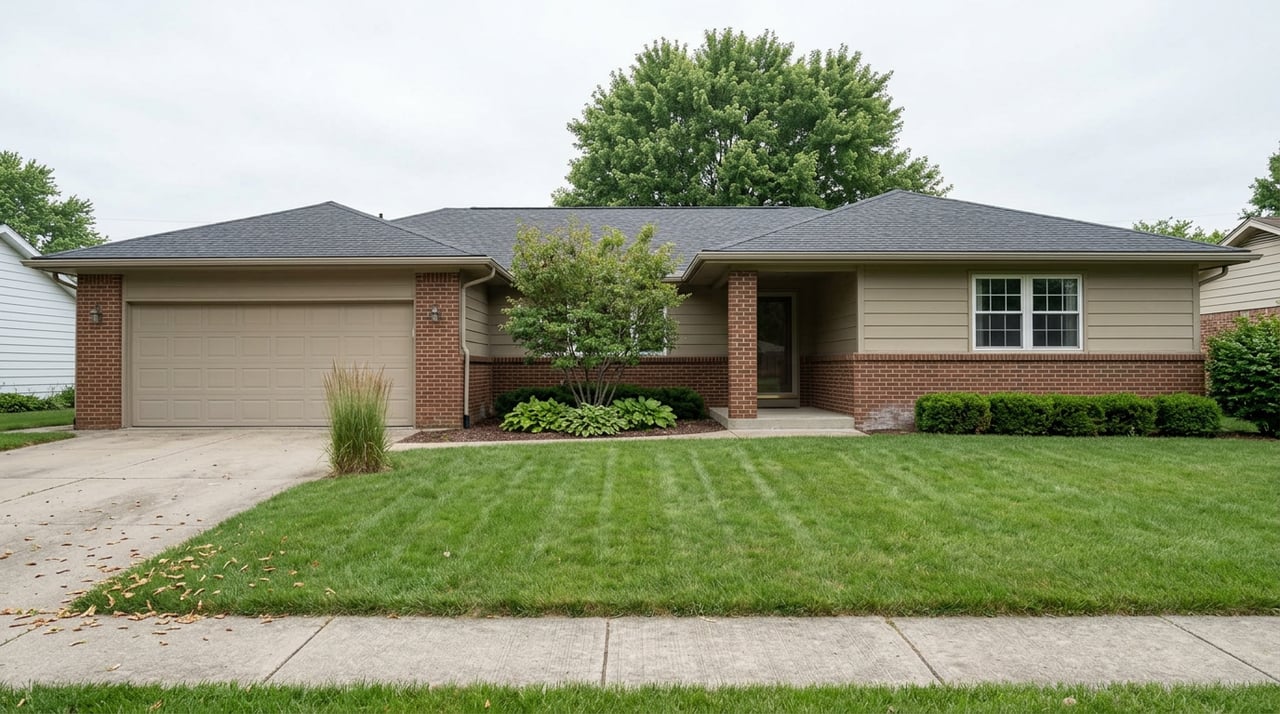
The second product is Matteson's older, conventionally financed stock. Old Matteson holds Craftsman bungalows, Colonial Revivals, and Cape Cods built mostly between the 1920s and the 1950s. West Matteson is newer, with ranch and split-level homes built from the 1980s into the early 2000s. Woodgate is another established pocket, the kind of quiet tree-lined subdivision that shows up in listing descriptions as the neighborhood a buyer wants once they've toured a few others. These homes carry standard 30-year mortgages, standard comps, and standard appraisal processes. They're what most portal medians are quietly built around, even when a Timber Ridge sale is sitting in the same monthly dataset.
The third factor isn't a product at all. It's volume. Redfin's own March 2026 figures showed only 20 homes sold that month, up from 12 the year before. When your sample size is in the teens, one $475,000 estate sale or one $39,900 manufactured home closing can swing a year-over-year percentage by double digits without reflecting any real shift in what typical buyers are paying.
Put those three things together and the contradiction in the table above stops looking like noise. It starts looking like three separate markets getting forced into one number.
What Actually Anchors The Stick-Built Side
If you're comparing Matteson to a neighboring suburb specifically for the conventional single-family segment, the detail worth knowing is the Matteson Metra Electric District station at 215th and Main. It's a fare zone 3 stop with 755 parking spaces, including 14 ADA spots, running direct service into Chicago's Millennium Station. That kind of commuter access tends to support values in the stick-built subdivisions around it in a way that has nothing to do with what's happening over at Timber Ridge Park. If you're weighing a West Matteson ranch against a comparable home in a suburb without electrified rail access, that station is part of what you're actually paying for, separate from whatever the village-wide median is doing that month.
Twenty Sales Is Not A Trend Line
It's tempting to treat a year-over-year percentage as settled fact. A 25 percent gain sounds like a market on fire. A 7 percent drop in price per square foot sounds like a correction. Both can be true in the same month if they're measuring different corners of the same village with a small enough sample that outliers carry real weight.
The practical fix isn't to ignore the numbers. It's to ask what's in them before trusting the headline. A median built from 20 sales deserves a follow-up question: which 20 homes, and were any of them manufactured, distressed, or well outside the typical range for that pocket of town.
How To Read A Matteson Listing Like Someone Who Already Knows This
Before comparing a Matteson number to anything else, it helps to sort what you're actually looking at:
- If the address is inside Timber Ridge Park, expect chattel financing conversations, a different closing timeline, and community approval steps that don't exist for a conventional sale.
- If the listing sits in Old Matteson, West Matteson, or Woodgate, you're in the conventional mortgage market, and portal medians will track those comps more reliably.
- If a single listing seems to skew a monthly median hard in either direction, check the sale count for that month before trusting the percentage.
- If commute access matters to your decision, weigh proximity to the Metra Electric District station specifically, not just the village average.
None of this requires distrusting any single source. It requires knowing that "Matteson" on a portal dropdown is really shorthand for several different housing products sharing a mailing address.
FAQ
Why did Redfin show a 25 percent price jump when Movoto showed a decline? They were measuring different things in different months. Redfin's March 2026 figure was a median sale price built from 20 closed transactions, while Movoto's August 2026 figure tracked median list price per square foot. Small sample sizes and different metrics can move in opposite directions without contradicting each other.
Are Timber Ridge Park homes included in village-wide median calculations? Manufactured homes in Timber Ridge Park do appear in some listing datasets, but because many are chattel-financed rather than mortgaged, they can be tracked, appraised, and reported differently than conventional sales. That's part of why the same month can produce different medians depending on the source.
What's the most reliable way to compare Matteson to a nearby suburb? Compare like to like. Match conventional stick-built homes in Old Matteson, West Matteson, or Woodgate against similar stock elsewhere, and treat Timber Ridge Park as its own category with its own pricing logic, rather than folding both into a single village average.
If you're trying to figure out which Matteson your budget actually fits, whether that's a manufactured home in Timber Ridge Park or a ranch a few blocks from the Metra station, that's exactly the kind of sorting Elizabeth "Betty" Botello does every day. Let's Connect and figure out which numbers actually apply to you.