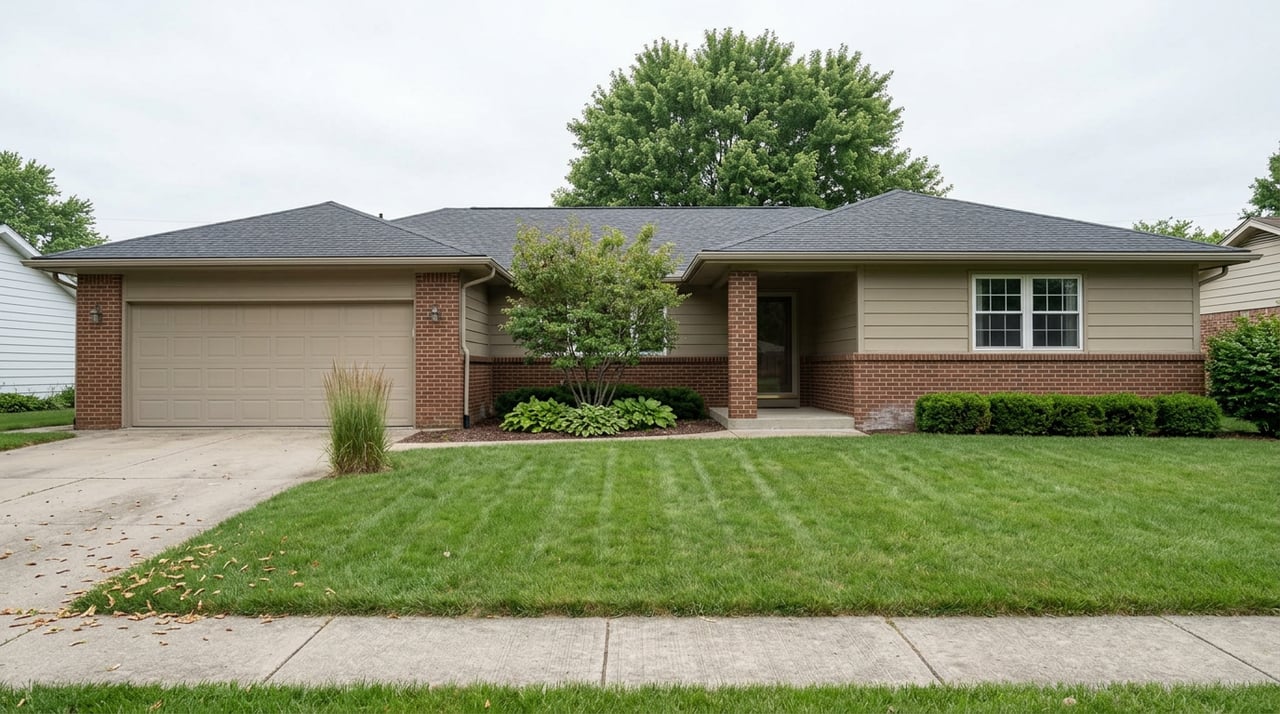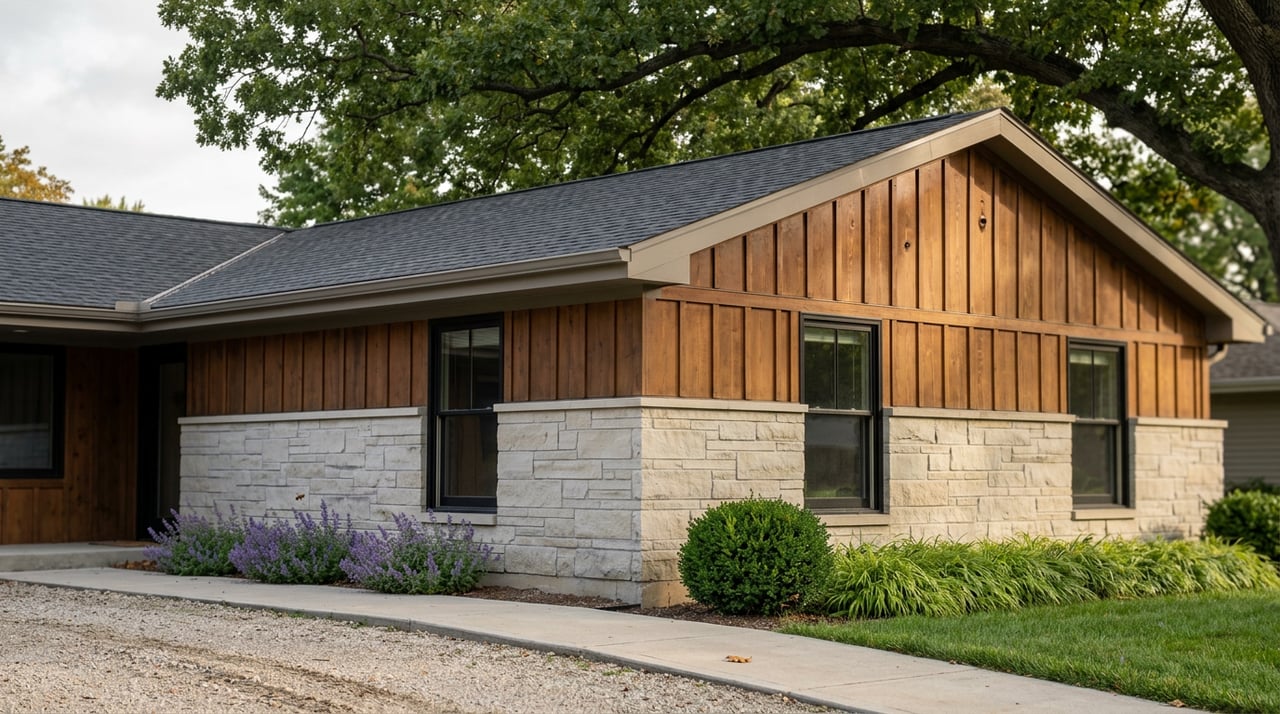
Two Peotone listings both say "10 acres." One is priced like a starter home. The other is priced like a small commercial center. Neither seller is wrong. The gap between them is the whole story of buying land in this village, and it comes down to four numbers most out-of-town buyers never learn to read.
Per-acre averages are the wrong tool for Peotone. LandSearch currently pegs Peotone at roughly $23,858 per acre across 34 listings, with an average listing price near $548,342. That average hides more than it explains. The parcels behind it are doing entirely different jobs.
The four levers that move price per acre
A Peotone acre is priced by four things acting independently:
- Soil Productivity Index (PI). A weighted score of the soil's ability to grow row crops. Peotone farm parcels commonly land between PI 121 and PI 126, which is genuinely high-grade Illinois farmland.
- Zoning class. A-1 Agricultural, E-2 Estate, I-1 Limited Industrial, and B-3 General Business are all present inside a short drive. Each one prices differently per acre because each one allows a different use.
- Tillable share. A 149-acre farm with 149.22 FSA crop acres is nearly 100 percent income-producing. A 25-acre parcel with a creek, timber, or CRP enrollment is not.
- Frontage and access. Governor's Highway, S. Ridgeland Avenue, S. Egyptian Trail, and the Wilmington-Peotone Road corridor each carry different traffic counts, different road surface conditions, and different development ceilings.
When someone tells you "land in Peotone runs about $24,000 an acre," ask which of those four levers they're pricing. If they can't answer, they're quoting an average, not a market.
Reading a Peotone listing like a local
Here is what those levers look like on parcels actually on the market or recently on the market around Peotone. All figures are drawn from listing detail as of mid-2026.
| Parcel | Size | PI | Zoning | Feature that moves price |
|---|---|---|---|---|
| Governor's Highway / S. Ridgeland Ave. (north of village) | 120 ac | 121.7 | Agricultural | ~115.82 tillable acres, one mile of Rt. 50 to Ridgeland frontage |
| W. Barr Rd. (2 mi west of Peotone) | 149.82 ac | 125.8 | Agricultural | 149.22 FSA crop acres, 2.7 ac in CRP contract |
| S. Egyptian Trail (east of Peotone) | 25 ac | 125.3 | Agricultural | ~24.83 tillable, level to gently sloping |
| Southern edge of village, off Governors Hwy. | ~9 ac | n/a | I-1 Limited Industrial | Former railroad right-of-way |
| Wilmington-Peotone Rd. corridor | 10 ac | n/a | B-3 General Business | On anticipated four-lane expansion, 5,600 vpd frontage |
| Buildable parcel with 3-board vinyl fencing and gravel drive | 4 ac | n/a | E-2 Estate | Ready-to-build residential estate lot |
Look at the first three rows. All A-1 Agricultural, all high PI, all mostly tillable. Those price against a farm-income model. A buyer there is essentially purchasing a small cash-flowing business with a soil test as the balance sheet.
Now look at the last three. The I-1 parcel prices against future light-industrial use. The B-3 corner prices against a future gas station, storage facility, or strip retail. The E-2 Estate parcel prices against a family who wants to build one house with a fence and a gravel drive. Same village, three completely different math problems.
The zoning letters that quietly reset your price
A Peotone buyer who doesn't yet know these four letters is buying blind:
A-1 Agricultural. The default for anything that looks like a farm field. Row crops, hay, pasture, one farmhouse per parent parcel in most cases. Priced on PI and tillable share. This is where the "$X per tillable acre" conversation lives.
E-2 Estate. The letter you want if you're buying to build a single home on real acreage. The 4-acre parcel currently offered as an E-2 Estate build site with fencing already up and a gravel drive in place is the shape of that market. You are not buying farm income. You are buying a foundation-ready homesite with the horse-and-garden option intact.
I-1 Limited Industrial. The ex-railroad-right-of-way parcel on the southern edge of the village is the local case study. Priced by access, not by dirt quality.
B-3 General Business. The 10-acre corner along the anticipated Wilmington-Peotone Road four-lane expansion sits here. The listing itself flags the intended uses out loud: fast food, hotel, strip center, retail, auto dealership, storage facility, service station, light manufacturing. Traffic count carries this price, not soil.
Two identically-sized parcels a mile apart can carry a five-fold price gap because the letter on the zoning line is different. That is not a market inefficiency. It is the market working exactly the way it's supposed to. The friction is that most buyers arrive without a translation for the letter.
The airport footprint question, which sellers now answer preemptively
Here is a Peotone-specific detail that does not appear in a generic land-buying guide anywhere. The 120-acre Governor's Highway / Ridgeland listing explicitly states in the marketing that the site is outside the proposed South Suburban Airport. That sentence is doing real work. It exists because Peotone-area sellers know the first question a serious land buyer asks is whether the parcel is inside a state-planned acquisition footprint.
The practical read: parcels that can prove they sit outside the proposed footprint use that fact to hold price. Parcels that sit inside it price against a different, thinner buyer pool. If a Peotone listing you are considering is silent on the airport question, that silence is itself a data point worth resolving before you make an offer.
The due-diligence line items that surface after you're already in love
The listings themselves tell you what the local friction is. Read a batch of Peotone land listings back to back and the same phrases keep appearing because they are the things that kill deals here:
- Hard-surface road access. One local listing calls it out by name. Gravel and dirt access affects year-round drivability, mail delivery, and, in some cases, lender comfort.
- Flood plain. A parcel advertising "no flood zone" is telling you the neighbors don't get to.
- ComEd easements. Overhead utility corridors that limit where you can put a foundation, a barn, or a pond.
- Pipeline easements. Same idea, buried, and often invisible on a walkthrough.
- CRP contracts. The W. Barr Rd. farm carries an estimated 2.7 acres enrolled in a CRP contract. That is federal payment income you inherit, along with the restrictions on how those acres can be used until the contract runs out.
- Well and septic. Not city water, not city sewer. On A-1 and E-2 land north, south, and east of the village, you are drilling and you are engineering a septic field. Both have real cost, both have soil-dependent variables, and both need to be scoped before you write an offer, not after.
None of these six items reduces a good parcel to a bad one. Each of them changes the price a rational buyer should pay. A listing that discloses them up front is easier to underwrite than a listing that stays quiet and lets you find them at inspection.
What the pace of the market tells you
Homes.com currently reports that Peotone-area residential listings sell in roughly 31 days, against a national average around 44. Land runs slower than houses everywhere, and Peotone is no exception, but the residential pace tells you something useful about buyer behavior in the surrounding market. Buyers are here, they are decisive, and they are not waiting for the airport question to resolve before they act on parcels where the question is already settled.
If you are the buyer, that means the parcels with a clean zoning letter, a documented PI, a stated tillable share, and a clear position outside the proposed footprint will not sit long. The parcels that leave those questions open are the ones you will find still available a season later, usually at a price that reflects the ambiguity.
FAQ
Does a higher PI always mean a higher price per acre? Only within the same zoning class. A PI 125 A-1 farm parcel and a PI 125 parcel that sits under a B-3 corner are priced against different buyers entirely. Compare within the letter first, then within the PI.
Can I put a manufactured home on E-2 Estate land in Peotone? Rules vary by parcel and by any applicable covenants recorded against the land. That is a question to answer parcel-by-parcel with Will County zoning before the offer, not after.
What should I ask for in writing before I go under contract on Peotone acreage? A survey, a soil test if the parcel is being priced as farm ground, a written statement on the airport footprint, documentation of any CRP contract, and a map of any recorded easements. If those five items come back clean, you can price the parcel with confidence.
Buying land here rewards patience and a translator. If you want a walk-through of a specific Peotone parcel with the four levers and the six friction items applied to your numbers, Elizabeth "Betty" Botello works this corridor every week. Let's Connect.